Introduction
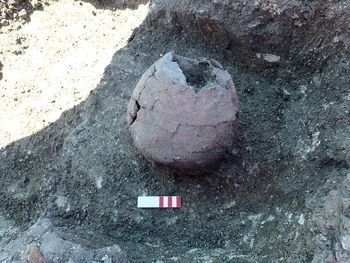
This collection comprises reports, digital photographs, photogrammetry, GIS files, and site records from the excavation by INFRA Archaeology at Wellwick Farm, Wendover, Buckinghamshire undertaken from December 2019 to July 2020.
Project Summary
The general aims of the Archaeological Recording across the Site were provided in the Project Plan and were to:
- Provide further understanding of the undated settlement features across the site and establish a date for their use;
- Confirm and record the presence, extent of any late Bronze Age and Iron Age settlement activity;
- Confirm and record the origin of the domestic activity cross the site and its continuation through the periods;
- Confirm the presence of the likely medieval settlement activity in the central southern area of the site;
- Confirm the nature and extent of the likely medieval settlement activity in the central southern area of the site; and,
- Understand the impact of the earlier phases of settlement activity on those of a later date.
The excavation also sought to contribute to the following specific HERDS objectives:
- KC10: Provide further understanding of the transition between a mobile pattern of settlement in the Early Bronze Age to the development of fixed settlement and enclosure, in the Middle and Late Bronze Age
- KC15 (Key Objective): Can we identify regional patterns in the form and location of Late Bronze Age and Iron Age settlement across the route, and are there associated differences in landscape organisation and enclosure?
- KC16: Investigate the degree of continuity that existed between Late Bronze Age and Iron Age communities in terms of population, mobility and subsistence strategies
- KC18: Explore the evidence for increasing social complexity in the archaeological record in the Late Bronze Age and Iron Age, and to identify patterns of intraregional and regional variation
- KC40: Identify patterns of change within Medieval rural settlement from the 11th to mid-14th century.
Re-use Value
A high density of archaeology was uncovered during the excavation dating from prehistory through every period to post-medieval, with some features being of both regional and national significance. The focus of land use can be seen to change over time from a socio-cultural or religious/ceremonial focus during prehistory (timber circle, barrow) to domestic/agricultural in the iron age (enclosed settlement). The Roman period showed evidence for both funerary and light industrial/agricultural land use. Industrial and agricultural land use was prevalent during the medieval period, becoming more agriculturally focused over time through to the present day.
These results indicate that the site has the potential to inform specific aspects of the ‘future research aims’ that have been outlined in the archaeological research framework for Buckinghamshire; therefore it is suggested that further work be carried out using the site’s datasets (in-depth research into the sites Bronze Age monuments, further refinement of the sites stratigraphy) and assemblages (detailed analysis of the faunal and human remains, lead coffin, pottery, and worked stone finds).
Any further analysis would benefit from integration with local and/or related site archives and datasets, and vice versa.