Black Country Historic Landscape Characterisation
Wolverhampton City Council, 2009. (updated 2010) https://doi.org/10.5284/1000030. How to cite using this DOI
Data copyright © Wolverhampton City Council unless otherwise stated
This work is licensed under the ADS Terms of Use and Access.

Primary contact
Paul
Quigley
Landscape Archaeologist
Black Country Archaeology Service
Wolverhampton City Council
Civic Centre
St Peter's Square
Wolverhampton
WV1 1RP
England
Tel: 01902 555493
Resource identifiers
- ADS Collection: 939
- DOI:https://doi.org/10.5284/1000030
- How to cite using this DOI

Introduction
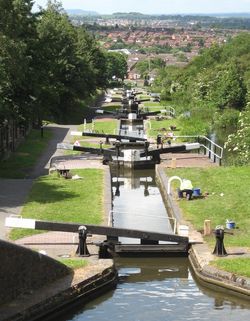
The Black Country Historic Landscape Characterisation (BCHLC) has been carried out by Black Country Archaeology Service on behalf of the four West Midlands local authorities covering the area. It has been funded by English Heritage.
Although the national programme of Historic Landscape Characterisation had rural beginnings, the HLC in the Black Country records the most urbanised landscape of any equivalent project so far published, covering as it does the area of Dudley, Sandwell, Walsall and Wolverhampton. The BCHLC aims to be a tool in understanding the landscape as it exists today, by placing it firmly in a context of the historical development of its constituent parts. The purpose of producing this understanding is to assist the sensitive management of the built environment in the future, in particular to inform the local authorities' emerging Joint Core Strategy for the area in the period up to 2026. The BCHLC analyses the development of an area which has played a key part in Britain's industrialisation, evolving from a network of towns over the South Staffordshire coalfield to form one half of the West Midlands conurbation.
The main project is reported in three documents, The Black Country: An Historic Landscape Characterisation, 'Recycled Landscape: The Legacy of 250 years in the Black Country' and a technical appendix. Two supplementary reports address the representation of canals and a 'landscape character framework' for areas of expected rapid change. Lastly, a leaflet 'Our Past is All Around Us' has been used to promote the BCHLC.