
Introduction
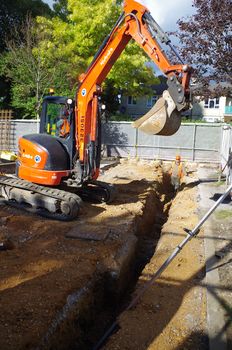
The Archaeology Unit of Southampton City Council carried out a watching brief in September to November 2016 on groundworks for the construction of an energy centre adjacent to Sturminster House, in Irving Road, Southampton.
The River Terrace gravels produced a single small flint flake. It would be classified as a secondary flake which would indicate flint-working, but was not associated with any other evidence of human activity, so was probably not in its original context.
Cutting into the truncated top of the gravels were five pits. Based on the burnt flints recovered from pits 11 and 13 they probably all date to the prehistoric period. Four unstratified flint fragments could be evidence of flint-working, but they are not very convincing. Nine fragments of burnt flint were also recovered from the modern layers.
The evidence shows that the River Terrace gravels, if examined closely, do contain much smaller artifacts than the handaxes which are the most common finds in the local museum collections.
At a much later period, perhaps in the later prehistoric period, the site was occupied on a short term basis.