
Introduction
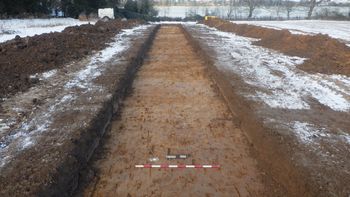
This collection comprises a report, images, CAD files, spreadsheets and a survey statement from an archaeological evaluation and excavation at Land at Beyton Road, Thurston, Suffolk undertaken by Archaeology South-East between February and March 2021.
A trial-trench evaluation and subsequent small excavation were carried out in advance of a housing development. Archaeological features and deposits of prehistoric to modern date were identified in ten trenches and in the excavation area.
A small assemblage of flint debitage was recovered from an accumulation of soil in a natural depression. The flint ranges in date from the Neolithic to the later prehistoric period. Lesser amounts of struck/worked flint (included a core, a blade and a bladelet of probable Mesolithic/Early Neolithic date) came from the ploughsoil and as residual finds in post-medieval features. Two small pits (or possible natural features) each produced a single undiagnostic flint flake, both of which were poorly stratified surface finds. Post-medieval features consisted of a ditch (corresponding to a field boundary shown on early 19th-century maps), and an infilled gravel pit. Five small pits were either modern or undated.