
Introduction
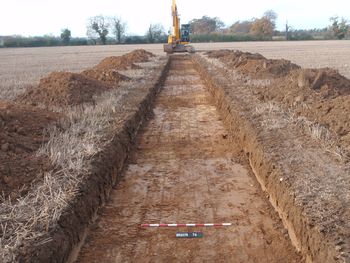
This collection comprises reports, images, a site plan, spreadsheets and site records from an archaeological evaluation of Land North-East of Bury St Edmunds, Great Barton, Suffolk undertaken by Archaeology South-East in two stages; 24 November to 15 December 2014 and 16 to 27 March 2015.
Archaeological features and deposits were recorded in thirty-seven of the evaluation trenches; these were concentrated on the higher ground in the northern part of the site and were principally of Iron Age and Roman date. Some post-medieval features (field ditches, a possible track and at least one quarry) were recorded also.
Low levels of activity during earlier prehistoric periods were represented by a small assemblage of worked flints, broadly dated to the Neolithic/Bronze Age although two pieces might have been of Mesolithic or Early Neolithic date. The flints were mostly found residually in later (Iron Age and Roman) features or in topsoil/subsoil deposits.
There was some activity on the site during the earlier Iron Age, demonstrated principally by a single pit and a possibly associated ditch. Activity increased in the Late Iron Age/early Roman period, as shown by pits and other cut features containing significance amounts of unabraded pottery and other domestic refuse. This phase of occupation might have been associated with an extensive enclosure ditch and two or three smaller ditched enclosures.
During the fully-Romanised period an extensive, rectilinear enclosure system developed in the northern part of the site; it is not clear if this replaced or extended the existing Late Iron Age/Roman enclosure(s). Significant amounts of unabraded pottery (mainly of mid/late Roman date) demonstrate nearby occupation, and this is supported by the evidence of pits, at least one inhumation and a horse burial.