
Introduction
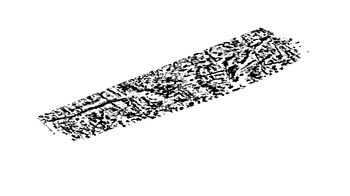
This collection comprises comprises geophysics data, a greyscale raster image, a CAD drawing and a report from a magnetometry survey at Great Cransley, Northamptonshire undertaken by SUMO Geosurveys in October 2022.
A temporary grid system was established over the site and marked out using canes. The location of the grid was set out using an RTK GPS system theoretically accurate to some 0.01m and referenced to OS co-ordinates. Hand Held: Data will be collected using a Bartington Grad 601-2. The instrument consists of two paired sensors (see below) and readings are logged at 0.25m centres along traverses 1.0m apart across 30m grids. The collection of data at 0.25m centres provides an appropriate methodology balancing cost and time with resolution as per Historic England guidelines. Two sensors mounted 1m horizontally apart and very accurately aligned to nullify the effects of the earth's magnetic field. Readings relate to the difference in localised magnetic anomalies compared with the general magnetic background.
The magnetometer survey has recorded numerous magnetic responses that have been interpreted as being of archaeological interest, though the possibility exists that they are associated with a WWII camp. Ditch and pit-like anomalies have been assigned to the categories of probable and possible archaeology depending upon their magnetic strengths and / or their correlation with heritage assets recorded in the HER. The locations of two possible enclosures / building platforms have been plotted in the data. Many of the responses extend beyond the limits of the survey. Linear anomalies and trends, pit-like responses and zones of increased magnetic response have been assigned to the category of uncertain. It has been difficult to interpret the responses with confidence, they could be archaeological, related to a reported WWII camp or even be natural in origin. The route of a former field boundary has been marked along with a service pipe.