
Introduction
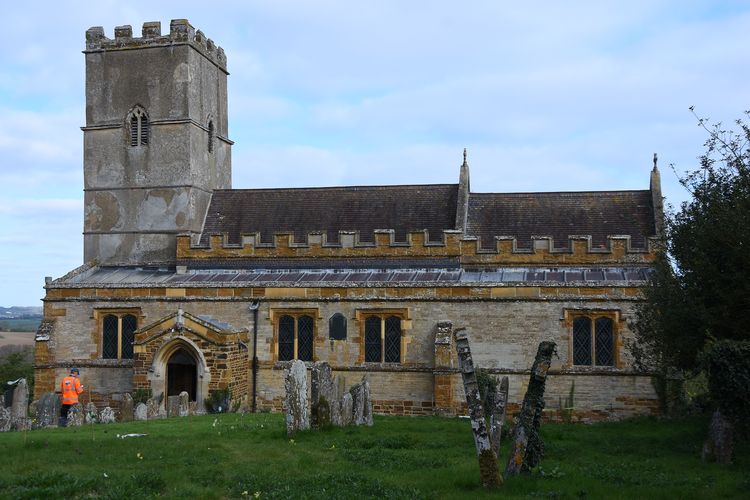
This collection comprises images and site records from an a programme of historic building recording at St Michael's Church, Church Stowe in the parish of Stowe IX Churches, Northamptonshire. Work was commissioned by Church Stowe Parochial Church Council and carried out by MOLA (Museum of London Archaeology) in April 2020.
Work was required prior to works being undertaken on the building for alterations in line with renovation and restoration of the tower. The render was causing issues to the building integrity and so the scheme was to remove parts of the render to assess the damage and then repair as necessary. A separate application dealt with the removal of the bells from the tower for renovation before the commencement of this project, for their reinstatement after this project completion. The tower comprises a two-phase construction, the lower, earlier phase was of poor construction and likely had a projecting east wing, with pitch roof, but the overall scale or form of this 'nave' remains unclear. There were several apertures to the west elevation which may indicate it had a belfry stage, and one to the east which suggests access into a gallery or the nave roof. When considering the date of this early tower it is paramount to consider fragments of a standing cross which remain set within the tower's structure, and free standing within the church. Their iconography suggests a 9th century date and likely stood alongside a building on this site which was most likely the early tower.
The tower was then heightened likely during the mid 10th. This upper stage has distinctive architectural features like long and short work and lesenes which have been placed to the village-facing elevations of the tower, suggesting some consideration was made for the economy of materials, and the display of status.
A remarkable discovery was the revelation of another carved piece of standing cross used within the towers structure and previously hidden by the render. This piece allowed comparisons to be made in the iconography of this cross and another example at Rothley, Leicestershire. Standing crosses are in themselves rare survivals in the Midlands and to find two examples with similar carvings adds increasing significance to the study of these pieces.