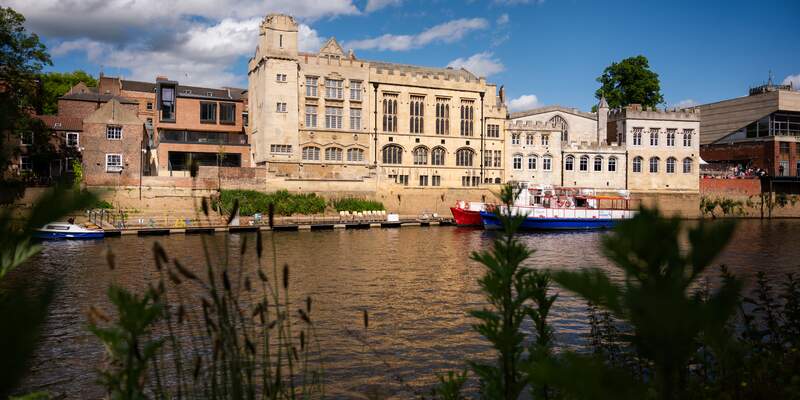
Last month, after nearly 30 years, the ADS team said goodbye to our offices at King’s Manor. Having called that building home for almost three decades, current and former staff came together to celebrate its history and share memories. While many felt nostalgic about leaving King’s Manor behind, the ADS hasn’t moved far. Our new home is the Guildhall, another remarkable historic building in the heart of York.
Originally built as a meeting place for York’s medieval guilds, the Guildhall has welcomed many notable figures throughout its history. In 2019, an extensive restoration project began, transforming the building for modern use while preserving its rich heritage, with the work completed in 2022.
Internet Archaeology Paper
Fittingly, Internet Archaeology recently featured a paper on the archaeological excavations carried out at the Guildhall’s North Annexe, offering a look into the site’s long and varied past.
Savine, B. et al. 2026 Archaeological Excavations at the North Annexe, York Guildhall, Internet Archaeology 71. https://doi.org/10.11141/ia.71.10
Activity at the site began with the remodelling of land sloping down to the north-eastern bank of the River Ouse. By the 1st century CE, the slope was cut back into a series of terraces onto which a succession of Roman domestic buildings were constructed and periodically replaced during the 2nd and 3rd centuries CE.
Intensive activity on the site did not resume until the late 11th or 12th century when the last remaining Roman buildings were dismantled. The site appears to have remained fairly marginal throughout the 12th and into the early 13th century, with activity largely focused on waste disposal.
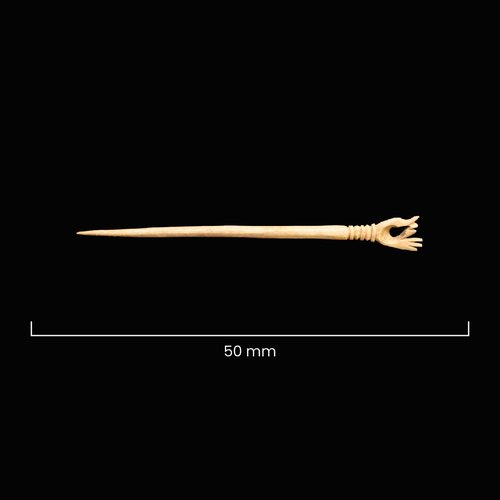
Documentary sources show that an Augustinian friary was established at the site by 1272. Reoccupation of the site in the mid-13th century is reflected by a substantial structure incorporating a large tile hearth. The appearance of large rubbish disposal pits demonstrates that waste disposal had become a more closely managed activity by the 14th century. A graveyard was established south-east of these structures and appears to have remained in use until the 16th century.
Following the Dissolution, the friary buildings were dismantled, leaving little more than their foundations. Soil accumulation predominated from the late 16th through to the 18th century, presumably relating to gardens at the rear of 10–14 Lendal, a pair of town houses built around 1714. Buildings again encroached onto the site from the 19th into the 20th century with the construction of the Guildhall’s North Annexe and the Hutments.
To read more about the excavations at the Guildhall visit the full paper at Internet Archaeology.