
Introduction
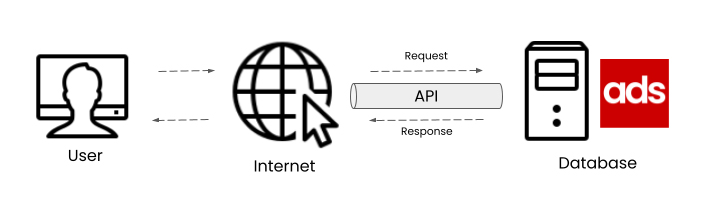
Back in May 2025, we at the ADS issued a survey to explore the possibility of implementing APIs (Application Programming Interfaces) to allow our users to access our different digital collections. The goal of the survey was to understand how researchers, practitioners, and users might benefit from new methods of accessing ADS resources.
You can read all about the survey and why we decided to explore APIs for the archaeological data we curate in this blog post published on the Soundbytes blog back in May.
The survey was open from May to August 2025 and during that time a total of 72 different users completed the survey. Of the total number of users who started the survey, 97% of them completed the survey, providing us with relatively clear results , which are in the most part complete. We have now analysed the results of the survey and want to share the results with our users, including what changes we plan on implementing in the near future.
Who Responded?
The survey appears to have attracted a diverse audience, which reflect the users that typically utilise the applications and resources offered by the ADS. When asked what types of organisations respondents work for, the majority of survey respondents chose academic or research institutions (41%) and a third did select an organisation type related to developer-funded archaeology (39%). This reflects the main user types of the ADS. Moreover, the large proportion of responses that selected ‘Other’ reflected the diversity of users within the cultural heritage landscape including charities, freelance workers, other researchers and members of the public with an interest in heritage.
Current Usage
The survey also asked questions about the current usage of the ADS by our users. These questions were designed to see where we should best target our efforts when considering the implementation of APIs within ADS resources.
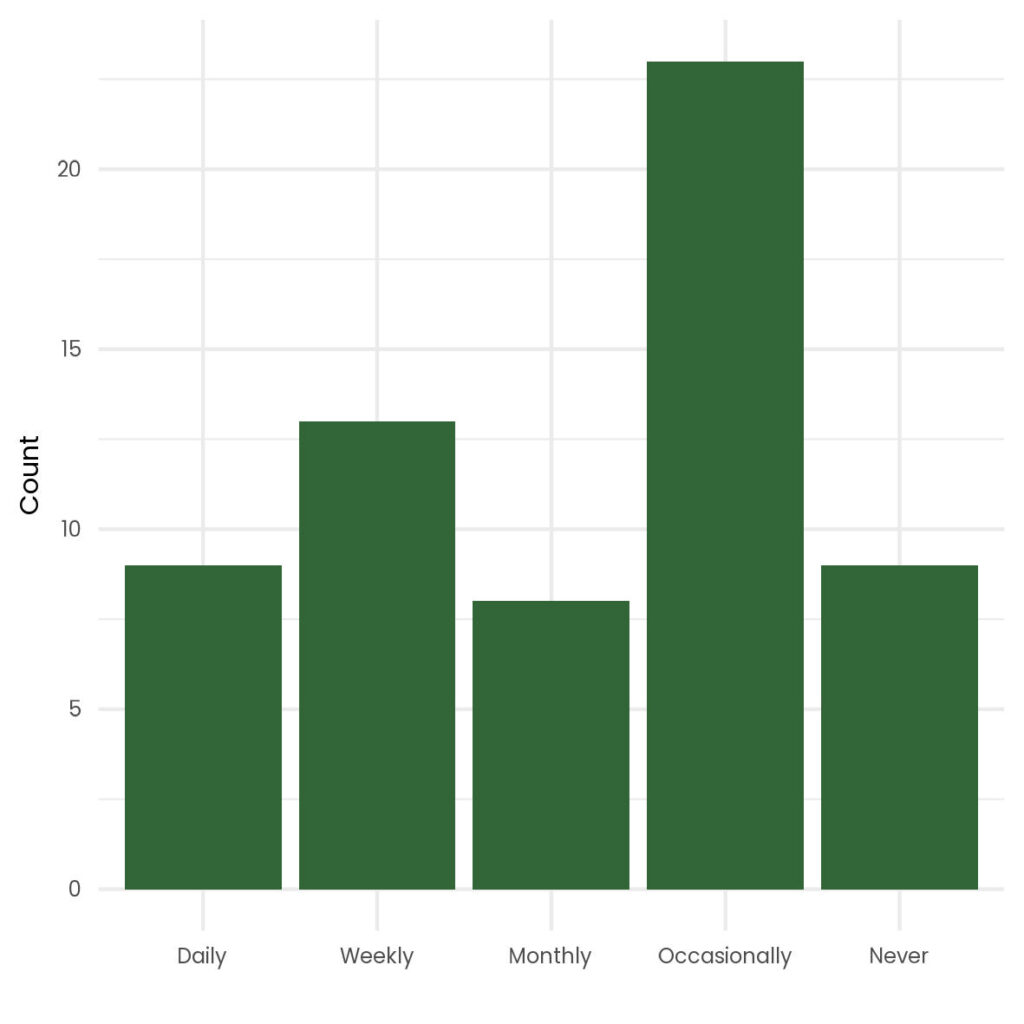
We also asked respondents about their usage of the ADS, such as the Archives, Library or ArchSearch. The majority, approximately 38% of all who took the survey, stated they used the ADS occasionally, with a smaller percentage (20%) on a weekly basis. Most users accessed the ADS on an occasional basis.
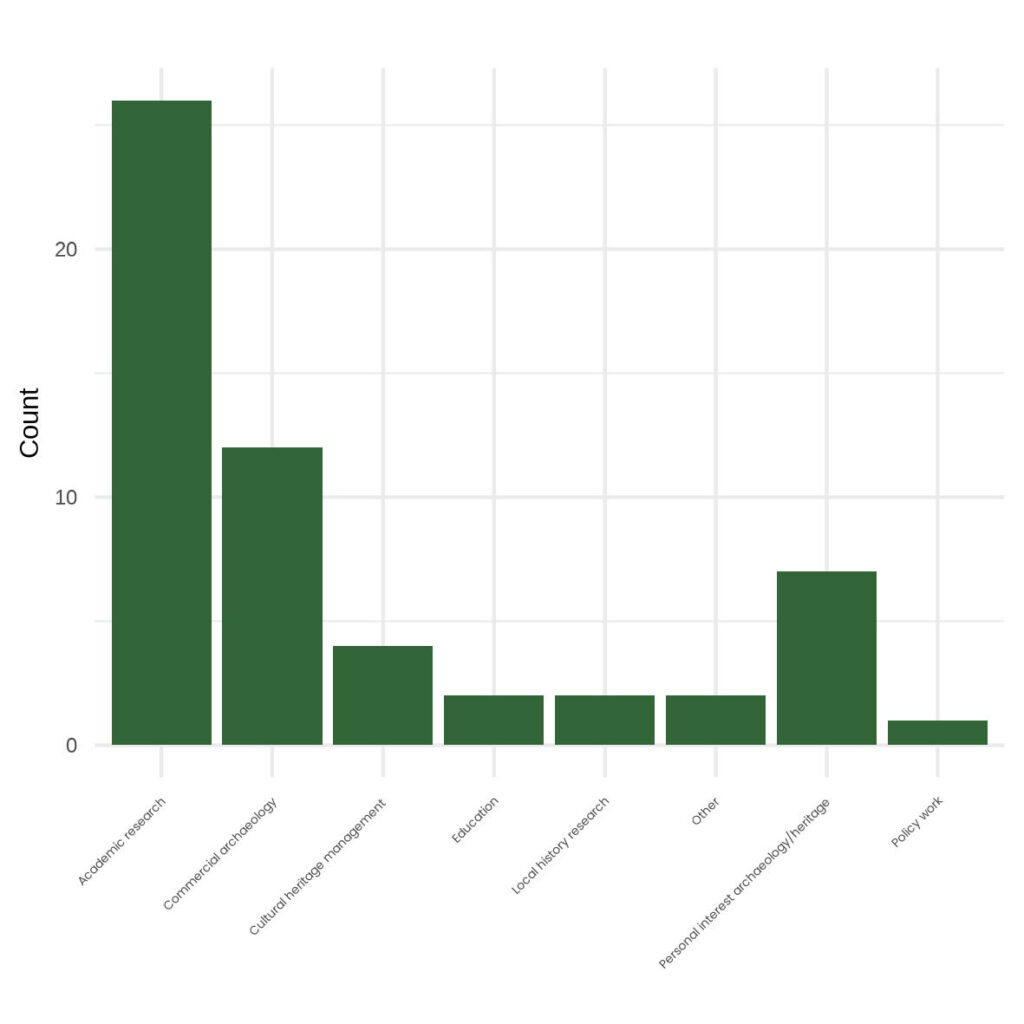
In asking respondents what their primary purpose was for using the ADS, the majority (46%) cite academic research as their core function, with a smaller group stating commercial archaeology (21%) as their primary motivator. Of the group who responded ‘Other’, these respondents listed supporting a community excavation and writing a book as the reasons for using ADS resources.
Interest in APIs
In the survey we also asked about the general knowledge and usage of APIs to understand both the experience of respondents to the survey, as well as understand where users currently access data via an API. This included the current usage of the OASIS API, which is also managed by the ADS.
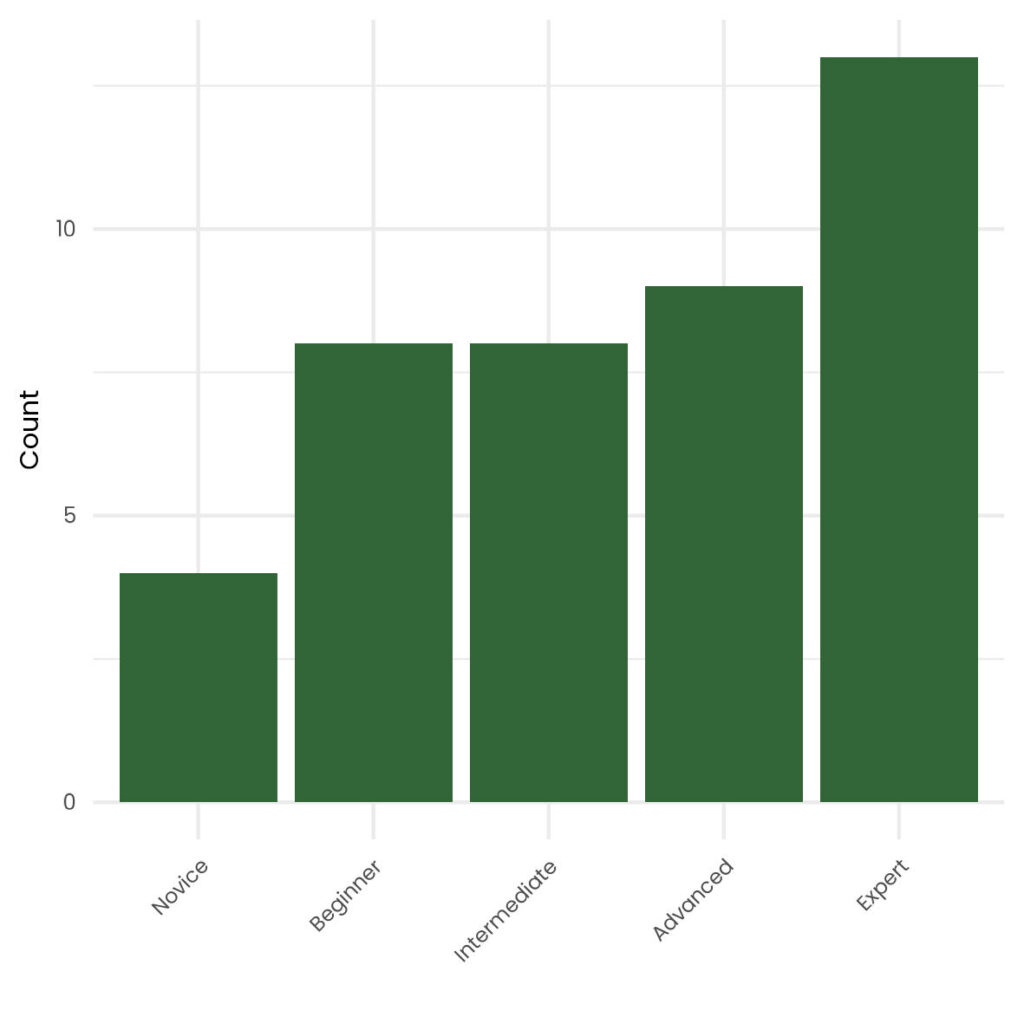
When we asked respondents whether they had knowledge of APIs prior to this survey, the vast majority stated that they had (80%) and approximately 75% had some prior experience using APIs. When asked users to rate their current expertise, the vast majority felt that they were ‘Advanced’ or ‘Expert’. This suggests that the survey attracted those who had expertise in APIs – likely those who could utilise these services and create new workflows to improve the work of their colleagues.
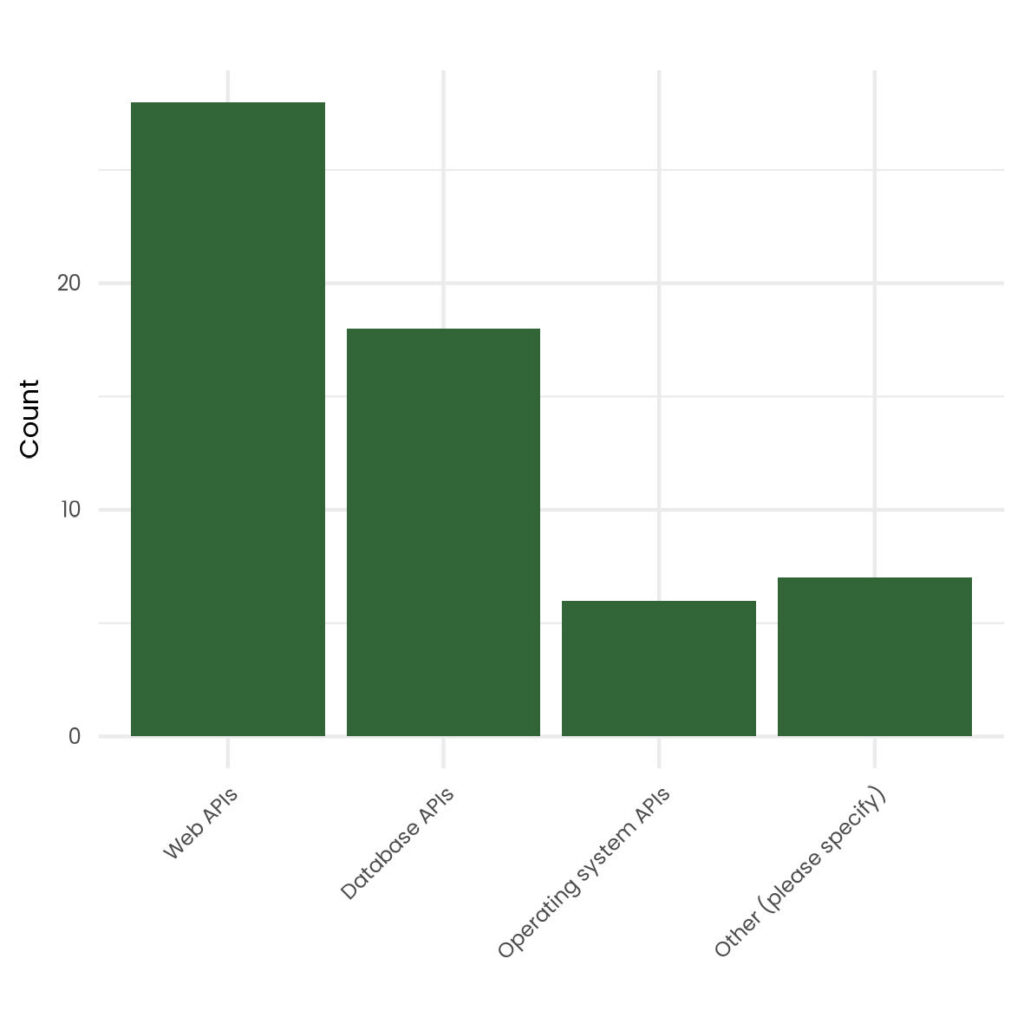
For those with experience of APIs, we also asked what kind of APIs they had experience with in the past. Web APIs (47%), which formed the majority of usage and other responses included all of the above and the use of the Zotero API. This answer demonstrates the breadth of knowledge of the respondents to the survey, as well as the preference for Web APIs
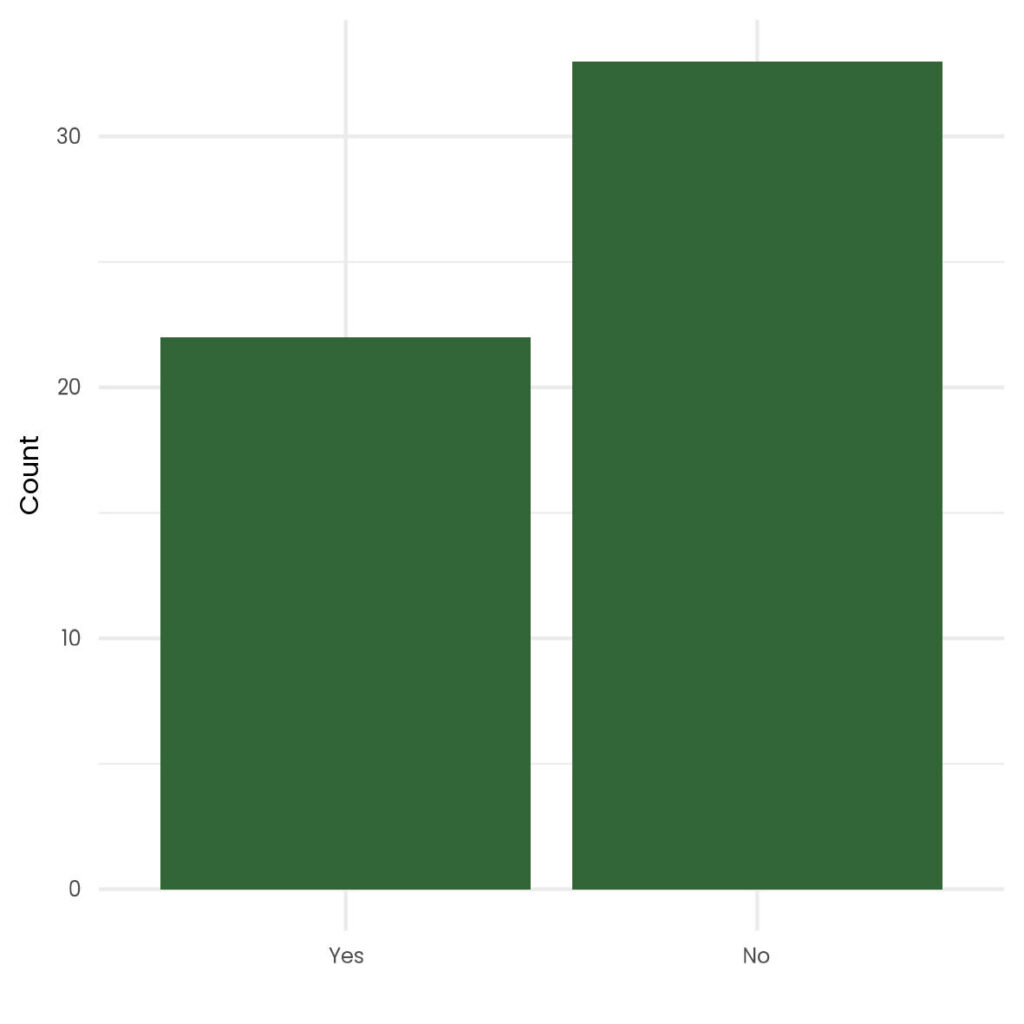
When asked about their knowledge of the OASIS API, approximately 60% were unaware of its existence and 86% had not used the API before. Demonstrating the value and use cases of this resource is important to drive usage.
Most Requested API Features
First, we asked whether users would be interested in accessing ADS collections through an API – the vast majority responded yes (69%) or maybe (25%), A smaller group (6%) were unsure, suggesting more usage case studies may be helpful in convincing users to adopt this service.
Some specific user case studies requested by respondents included:
- Linking to data in their own systems / linking with other related resources
- Accessing metadata (including spatial location) of material in ADS collections
- Creating a direct plugin to QGIS
- Sharing metadata from the ADS Collections with other aggregators, including Europeana
- Exploring data via an API as a means of building comparable interactive systems and repositories.
- Using the OASIS API to explore data from their own organisation and link into different tools.
- Using a write-enabled API for OASIS to can automatically create and update records from their own systems
We also asked users how important it was for them to access API resources (such as the archives or the library) via an API. Of all respondents the vast majority (73%) viewed API access as moderately, very or extremely important.
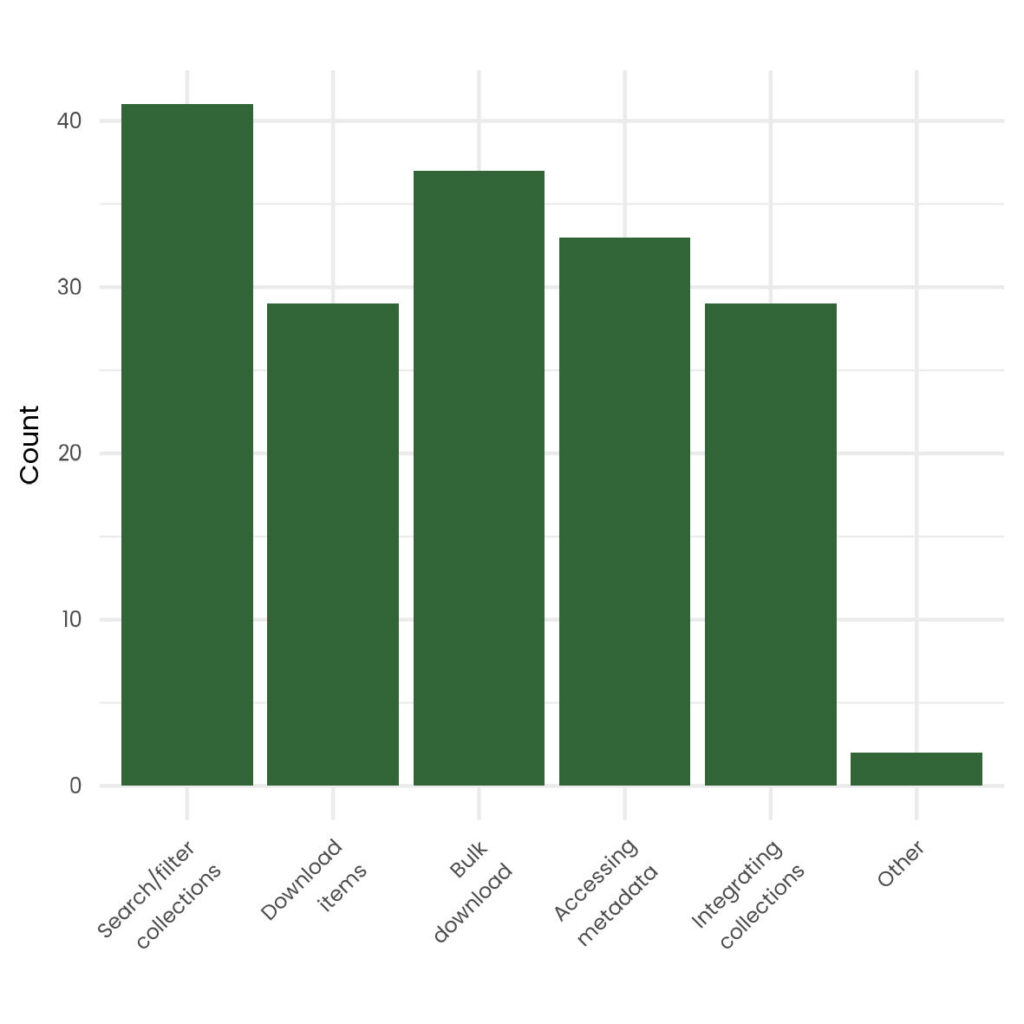
In the survey we also asked which of the following API features would be most useful to the user, including:
- Searching and filtering collections
- Downloading individual items
- Bulk downloading of multiple items
- Accessing metadata
- Integrating our collections into your own applications
Respondents were able to choose more than one option and each received a significant number of responses, suggesting that a broad range of features is desired by users.
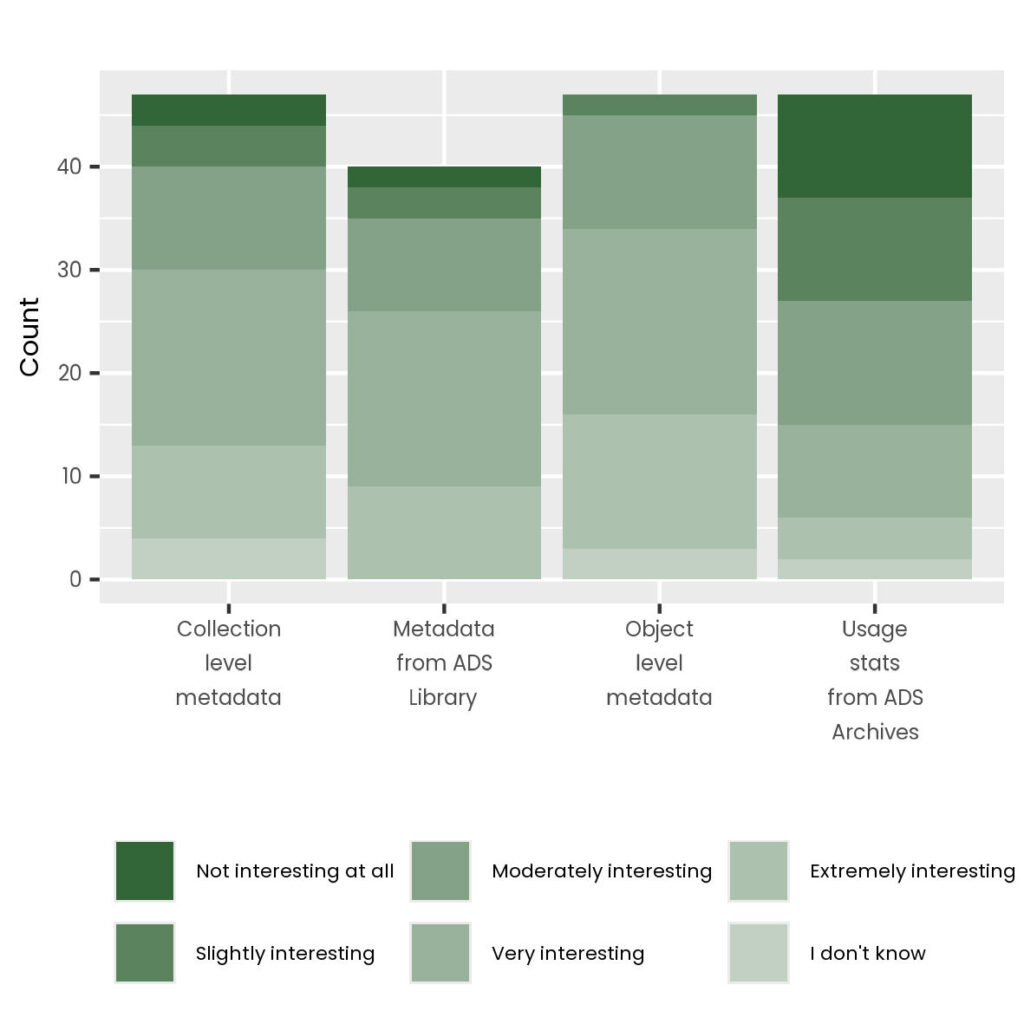
Finally we asked them about the ADS specifically, namely what types of use cases would interest them with ADS resources. The majority of interest were focused on Collection and Object level metadata from ADS Archives, as well as metadata from the ADS Library. Less interest was shown in the usage statistics of collections. This was likely due to this being of interest to specific depositors, when looking at their own collections, rather than general users.
Technical Preferences
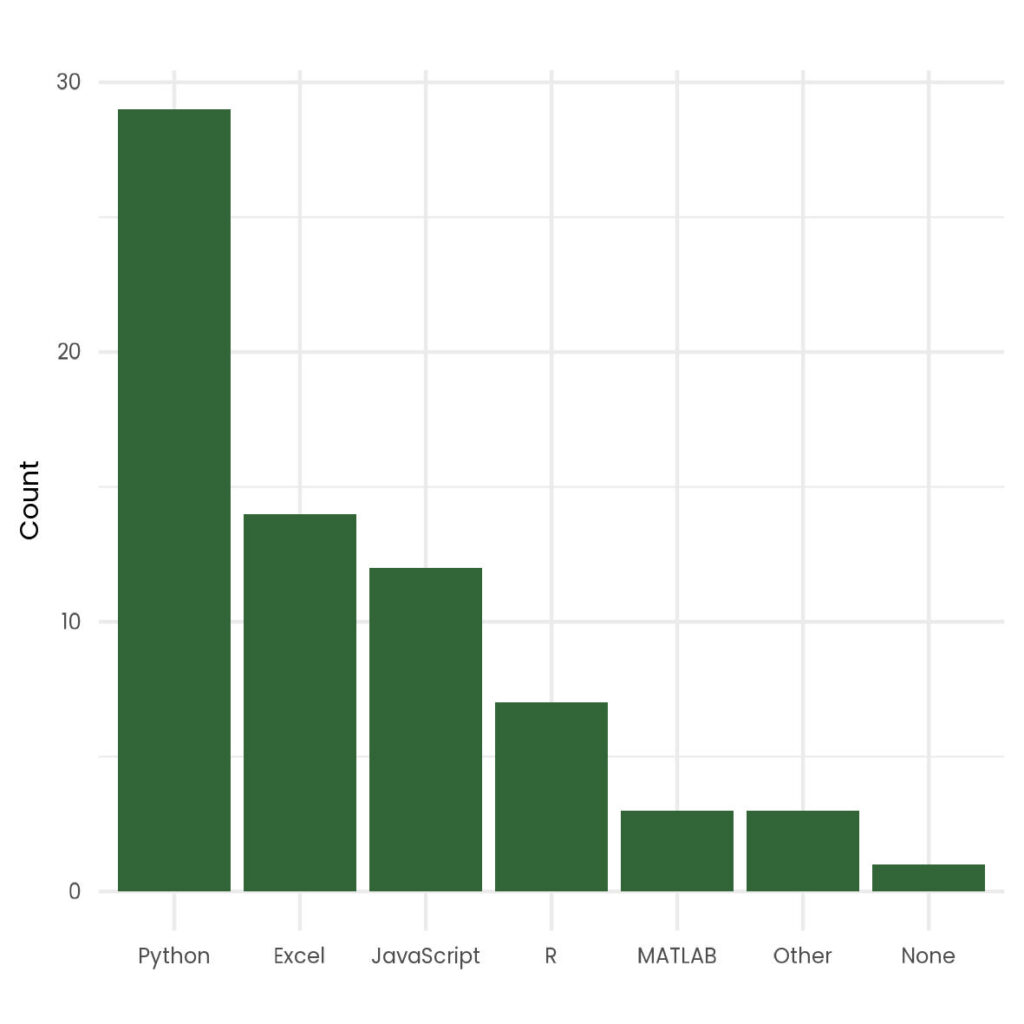
The final section of the survey covered what technical requirements users might want if we were to implement APIs for ADS resources. First we asked them what their preferred programming languages were. This is to ascertain how we might best support their connection to and use of any APIs we were to implement.
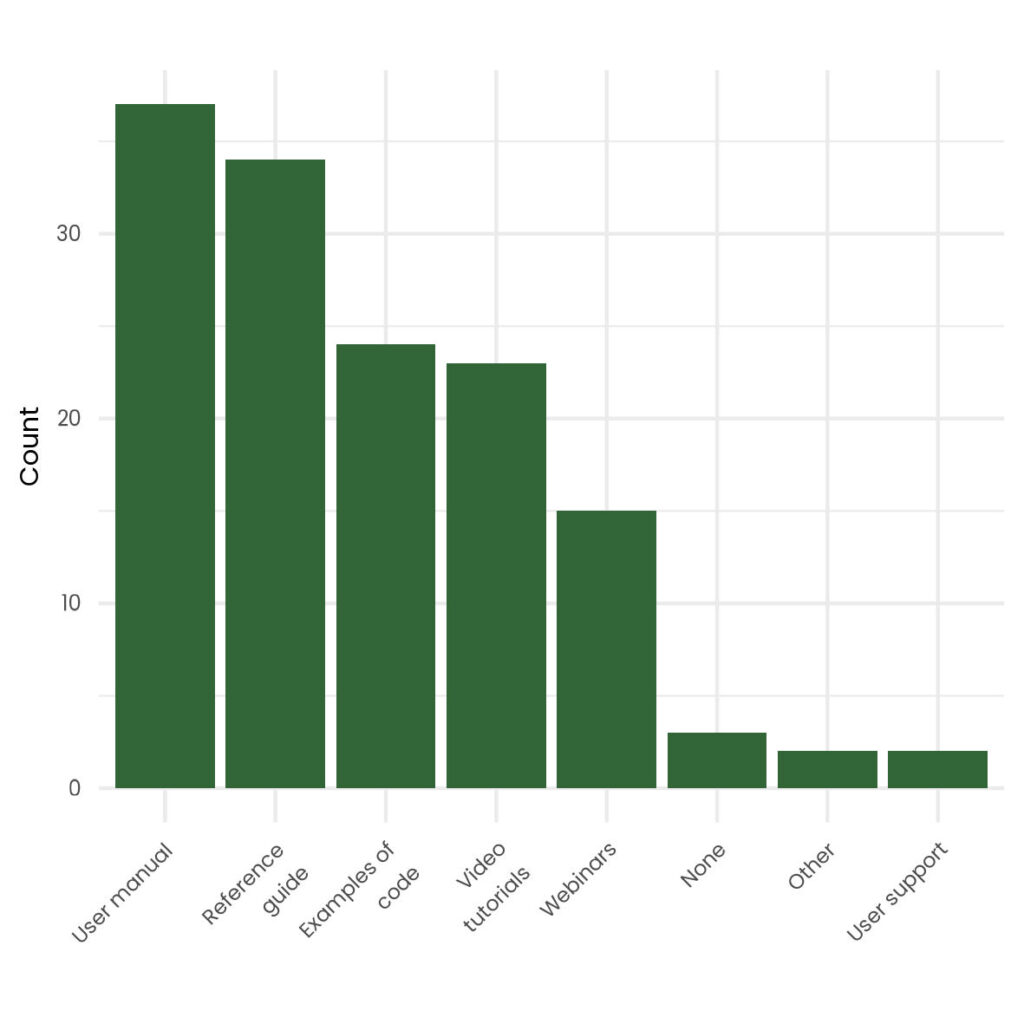
We also asked what type of training and support they would prefer. Asked if they needed training, More than half of respondents (52%) felt that they would require some training or training materials. When asked what training materials they would like the ADS to create, there was a wide variety selected (users were able to select more than one response). Once documentation was by far the most requested.
What We Learned
What did we learn? Well quite a lot. We know that there is an appetite for these services, but also a sub-community within the archaeology sector who are already proficient in the use of APIs as part of this work. This is helpful, as it shows that there is demand for these services, but also that uptake will be quick as long as we implement the right systems, use cases and training materials.
We’re included a summary of the key insights below for your reference:
User Profile and Expertise
- 46% of respondents use ADS resources primarily for academic research
- 80% have prior knowledge of APIs
- 75% have previous API experience
- 30% self-identified as API experts
API Interest and Importance
- 73% view API access as moderately to extremely important
- 94% expressed interest in future ADS API use
Top requested API features:
- Searching and filtering collections
- Bulk downloading of multiple items
- Accessing metadata
Technical Preferences
- Python is the most preferred programming language
- 52% indicate a need for training materials
- Preferred training formats: User manuals and API reference guide
Next Steps
We would like to give a big thanks to all of the people who took the time to fill in the survey and for all those reading this who have an interest in ADS implementing APIs. The results of the survey, including any comments, will directly impact our plans for development in the future.
We are currently in the planning stages of how to implement APIs for ADS services and will report back once plans are firmly in place. This task will form a key strategic objective priority for the ADS in 2026 and 2027.
As always, we are always interested in hearing feedback from our depositors and users. If you have any feedback, whether about this initiative or any other resources that the ADS offers, please contact the ADS helpdesk ([email protected]) and we will make sure your comments get to the correct ADS staff member.