

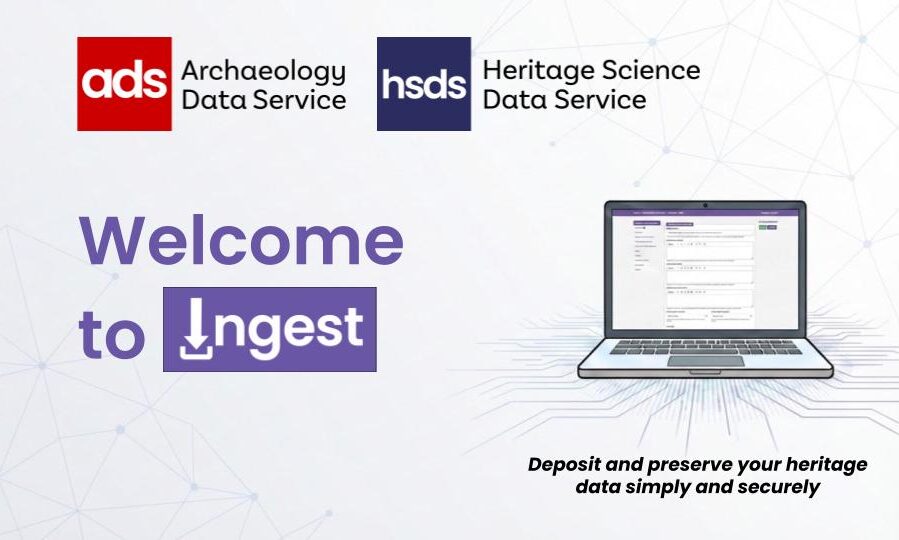
Back in September 2025, I had the pleasure to attend the CIfA Archaeological Archives Group conference “From Past to Future: Archiving 2000–2025”. My presentation gave an overview of how archiving practices at the ADS have evolved over the last decade in the face of the incredible growth of digital data in archaeology. This was also a wonderful opportunity to look out to the future and give a brief introduction to our brand-new deposit system Ingest.
ADS-easy
The ADS holds a substantial amount of data – 99TB of it – in various formats, which amount to over 8 million files (preservation and dissemination copies included), in just over 8 thousand collections (as of October 2025). A significant portion of this growth was driven by the increased ease and frequency of digital data collection on archaeological sites. Thus, ADS-easy was launched in 2013 to provide a faster, cheaper deposit method for small-to-medium collections, especially those created by commercial projects.
ADS-easy was developed with the aim to (1)engage more fully with depositors from the commercial sector, (2)to streamline existing workflows to keep manual involvement to a minimum (both for the depositor and the archivist), and (3)to simplify the charging process with the ADS-easy calculator allowing potential depositors to build in costs for the archiving of digital data earlier in the project lifecycle.
While it has quickly become the preferred deposition method for commercial projects — with over 900 users signing up to ADS-easy to deposit over 4000 archives since its launch — the system is now over a decade old and showing its limitations.
- Restricted file types: Many modern data types, such as 3D models, LiDAR, and DICOM files cannot be deposited via ADS-easy.
- Size and number limits: ADS-easy only accepts files with a maximum size of 100MB, deposits with a maximum of 1000 files, and geophysical survey data of less than 50Ha.
- Loss of structure: The current system “flattens” archives, removing the meaningful folder structures created by depositors.
- Metadata complexity: A lack of robust guidance and a reliance on multiple different metadata templates for each data type has often led to confusion, resulting in more manual interventions both for the depositor and the archivists during the ingest and archiving process.
Introducing the New Deposit System
To address these issues, the ADS is preparing to launch a new deposit system at the end of this month. This system is designed to be more sustainable, intuitive, and flexible. Key features of the new system include:
- No Limits on Data: The system will not be restricted by file size or number, and will accept all ADS/HSDS data types. It is also designed to make it easier for the developers to add new file types to the system, making it easier for the ADS/HSDS to support future technologies.
- Streamlined Metadata: The many individual metadata templates will be replaced by one master template, with the added flexibility to upload additional metadata files of different formats through one channel.
- Enhanced Interoperability: The system will allow depositors to pull project-level metadata directly from OASIS. It is also designed to be fully accessible and mobile-friendly.
- Retained Folder Structures: Unlike ADS-easy, the new system will preserve the original folder structure of a deposit, allowing archivists to view data exactly as it was organised by the creator.
- Improved Communication and Tracking: For the first time, depositors will be able to track the status of their archive (e.g. received, appraised, etc.) and communicate directly with the archivist through the system.
- Depositor Support: The ADS recognises that while the new system aims for long-term clarity, there will be a “learning curve” for users. To support this transition, our Comms team will provide expanded guidance and training resources, including hands-on workshops to help depositors prepare and deposit their data.
Looking Ahead
Although ADS-easy will remain available for a transition period, the new system will eventually become the sole method for all ADS depositions (and costing), regardless of archive size.
This shift represents a major step forward in making archaeological data management more efficient and accessible for everyone involved.
For those with questions about upcoming deposits, the ADS continues to offer support via our helpdesk.



The improvements in data deposition are welcome. However, my question is – will OASIS remain as a free deposit for archaeological project report and metadata only deposition?
Hi Alistair, just to confirm, OASIS will continue to remain free to deposit both reports and metadata.