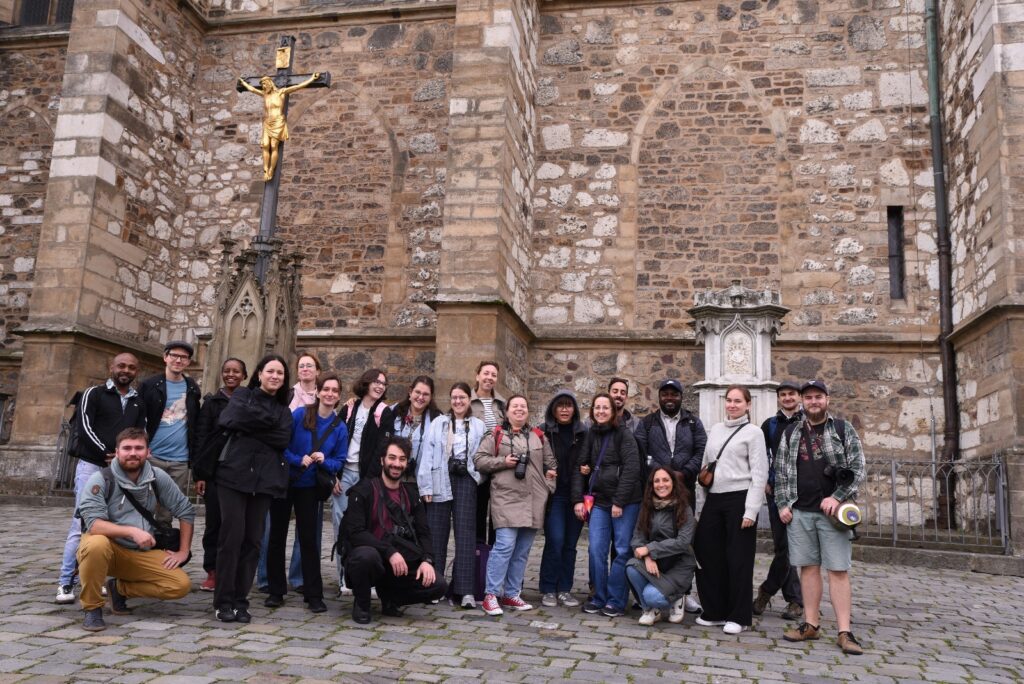
Back in September, I had the opportunity to attend the ATRIUM Summer School on 3D Models in Archaeology, hosted by the Archaeological Information System of the Czech Republic (AIS CR) research infrastructure at the Institute of Archaeology, Czech Academy of Sciences in Brno. The course brought together participants from across Europe and beyond to explore new methods for recording, processing, and preserving 3D data in archaeology. I attended with my colleague Marco Brunello as representatives of the Archaeology Data Service (ADS) and was eager to strengthen my understanding of 3D documentation workflows and bridge the gap between theory and practice. I wanted to expand my understanding not only of how to capture 3D data, but also how to process, analyse, preserve, and reuse it.
Arriving in Brno
After spending a weekend in Vienna, I travelled by train to Brno, my first time in the Czech Republic. The city immediately struck me as vibrant and full of character, with its blend of Jugendstil façades and lively streets. I walked to the Institute of Archaeology the evening I arrived, just to make sure I knew where it was. It felt reassuring, like checking your gate at the airport before exploring the duty free.
Learning in Practice
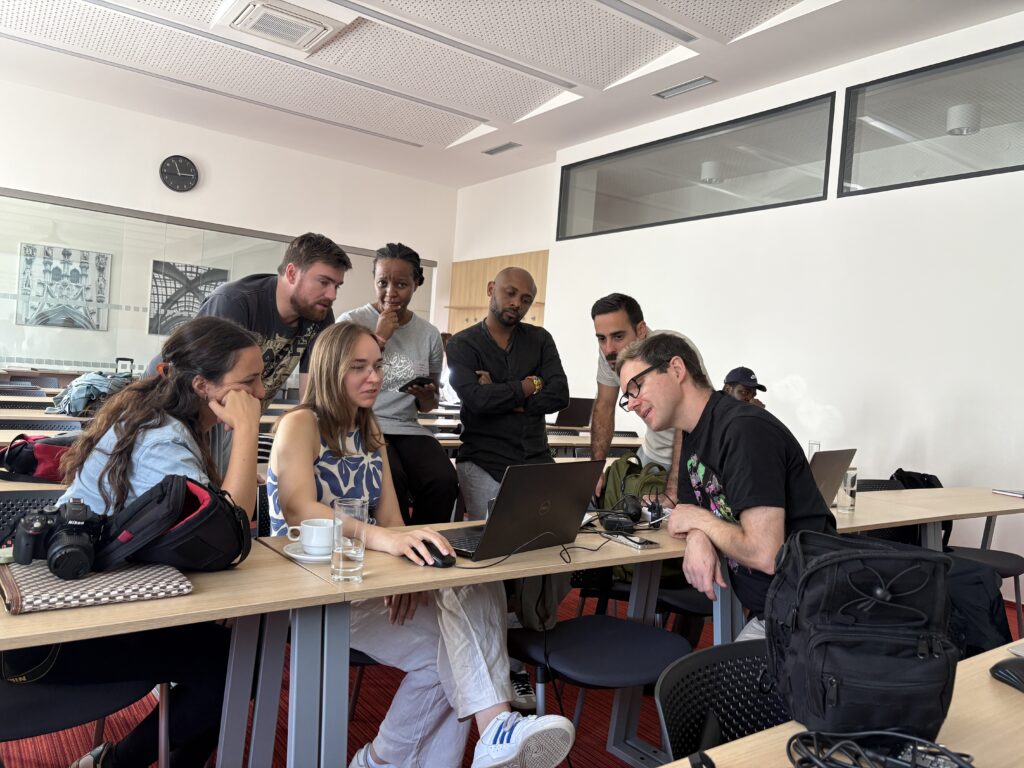
Throughout the week, the summer school offered a rich programme combining lectures and hands-on sessions. We learned about the theoretical foundations of 3D documentation, photogrammetry, and virtual archaeology, and then put those concepts into practice through small-group workshops.
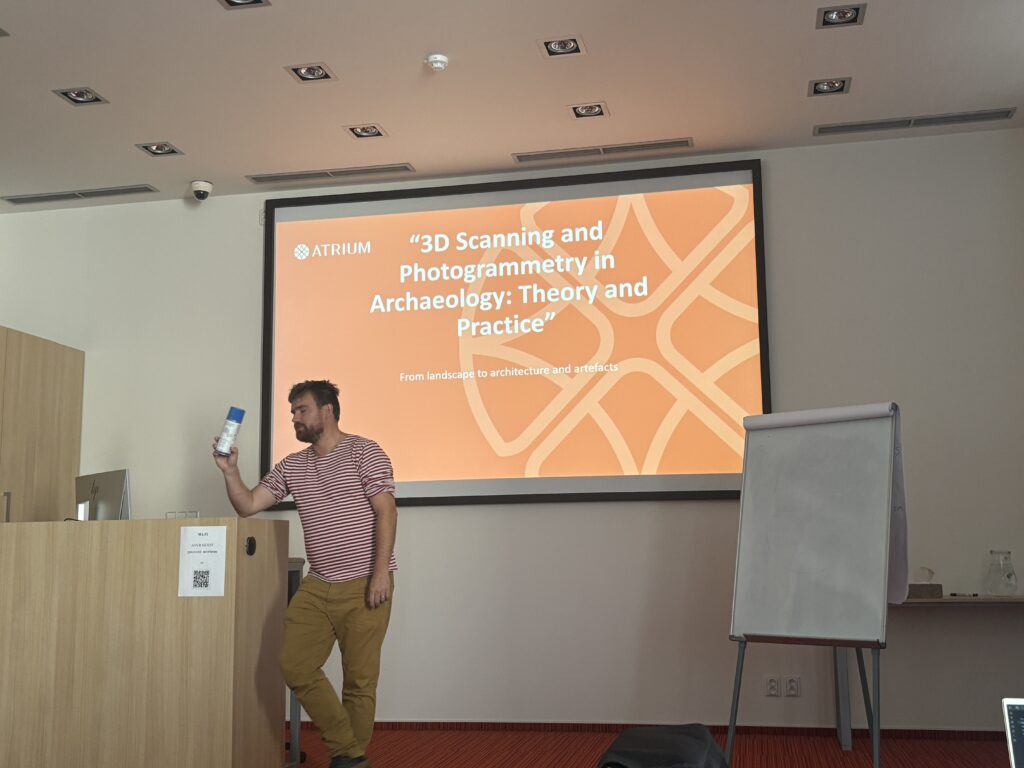
Vojtěch Nosek opened the course with an engaging introduction to 3D models in archaeology and photogrammetry, followed by Tomáš Chlup’s session Focus, Dial, and (Try to) Stay Sane: Photography Beyond AUTO Mode. Dr. Lenka Starková’s keynote on Photogrammetry, LiDAR, and HBIM in Archaeology and Heritage Care gave a brilliant overview of the intersection between recording methods and conservation.
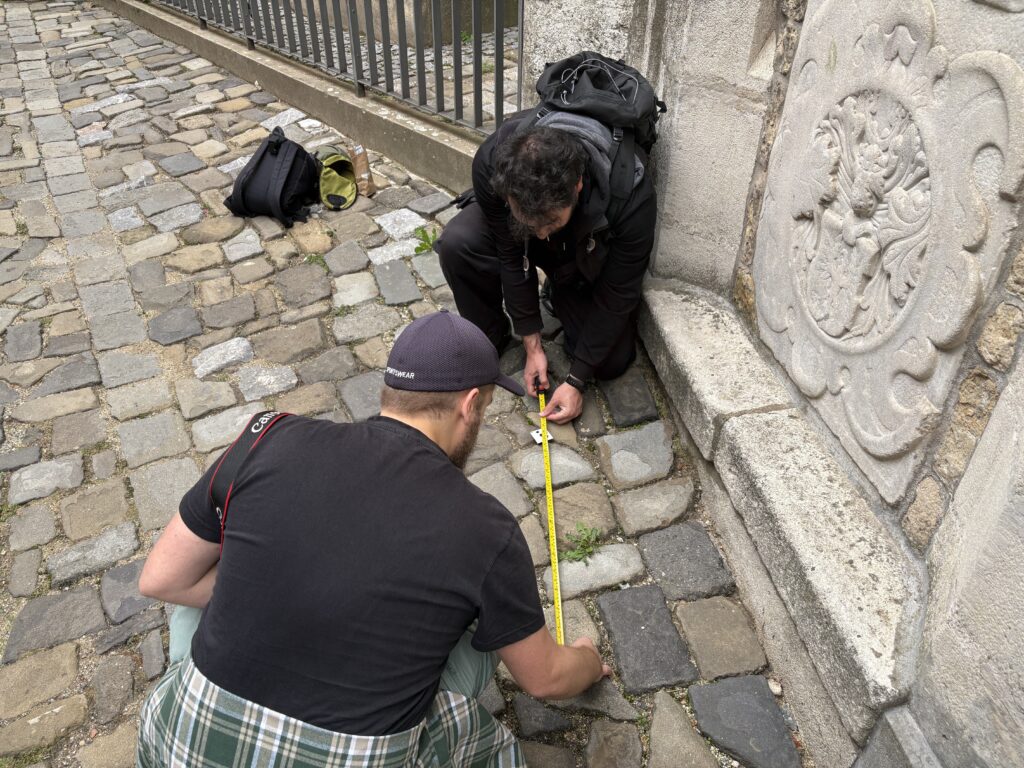
One of the most rewarding experiences was the session on data collection that took us outside to Petrov Cathedral. It felt like such a refreshing change of scenery after the previous day’s packed schedule. Having a morning walk through Brno’s city centre before starting made the day feel lighter, and working against the backdrop of the cathedral (with live organ music echoing in the background!) created an unforgettable atmosphere.
Working in small groups gave us a chance to collaborate more closely and learn from each other. With Barbara and Kateřina from the Slovak National Museum, I got hands-on practice photographing tombstones for photogrammetry. They helped me better grasp camera settings like depth of field and shutter speed, were generous when sharing their equipment, and together we ambitiously chose to digitise two tombstones instead of one. The real-time feedback from David and Vojtěch was invaluable, as we could immediately correct mistakes and ensure the data we collected would be usable later. This immediate cycle of learning, adjusting, and improving made me feel like I was building genuine confidence in the process.
Another highlight was the Reflectance Transformation Imaging (RTI) practical on the final day. Working with a different group, we explored how small details such as camera vibration, light positioning, or an uneven surface can dramatically affect the quality of the results. I was in charge of handling the lighting, which gave me the chance to notice first-hand how mistakes during image capture appear later in processing. It was a powerful reminder that good 3D data starts with careful planning and teamwork.
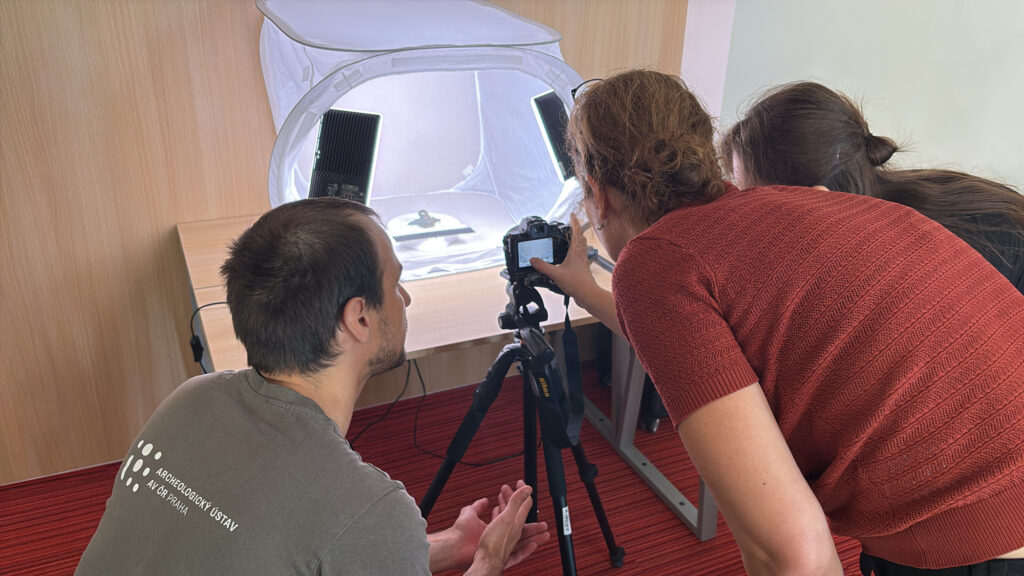
Other sessions introduced us to Blender and CloudCompare, and demonstrated the importance of aligning coordinate systems, cleaning meshes, and preparing models for presentation. These practical tips will be invaluable when I make small edits to models archived at the ADS, improving how they display in our interface.
Reflections on Collaboration
One of the highlights of the week was meeting participants from across Central and Eastern Europe, including the Czech Republic, Slovakia, Poland, Hungary, and Ukraine, as well as colleagues from further afield. Our conversations about shared histories, language, and folklore were fascinating. Coming from a completely different cultural background, I was deeply moved by how open everyone was in sharing their perspectives on heritage, identity, and resilience.
The social evening organised by ARUB was a lovely opportunity to unwind and connect outside of the classroom. Conversations flowed naturally about research, food, literature, and daily life. Chatting with colleagues from Ukraine, Myanmar, and Slovakia was especially impactful. These exchanges reminded me that people everywhere are working hard to improve themselves, their organisations, and their communities, often despite difficult circumstances. It was clear how deeply they care about heritage, and this made me reflect on how heritage itself shapes belonging and pride, but also how it can at times be misused to promote a sense of superiority or control. It reminded me that, at its heart, heritage work is about people: those who protect it, interpret it, and care about its preservation.
Learning Beyond the Classroom
The lectures on virtual archaeology were particularly thought-provoking. Jiří Unger from the Institute of Archaeology in Prague opened a larger conversation about uncertainty in 3D reconstructions. Reconstructions inevitably rely on imperfect sources, so uncertainty runs through every stage, from data collection to modelling. We also discussed how visual variables such as hue, size, or saturation can help represent uncertainty transparently in digital reconstructions.
Martin Košťál from the Department of Archaeology and Museology at Masaryk University guided us through Blender, demonstrating how to turn base models into photorealistic reconstructions. His talk emphasised that 3D modelling is as much an act of interpretation as it is of documentation, reminding us that every reconstruction is a creative and subjective process.
Simon Radchenko from the NGO Scientific Research Laboratory Archaic in Ukraine shared how 3D digitisation is being used to protect cultural heritage during the ongoing war. His work underscored how urgent and vital these technologies have become, and how heritage professionals everywhere, regardless of resources, are united by the same purpose: to safeguard what connects us.
Impact on My Work at ADS
The experience has had a lasting impact on how I approach 3D data at the ADS. I now feel more confident in understanding and explaining 3D workflows to depositors, for example, why more source images do not necessarily produce a better photogrammetry model. I also have a deeper appreciation for what happens after a model is created. How can it be reused, reprocessed, and preserved for the long term?
The hands-on sessions gave me a better technical understanding of model alignment, coordinate systems, and data cleaning, which will directly improve how I manage and prepare 3D models for archiving and presentation. Most importantly, this experience reaffirmed the value of connecting with peers across institutions, sharing ideas, and supporting each other in making heritage data more sustainable and accessible.
Final Thoughts
I am very grateful to ARUB and the organisers of the ATRIUM Summer School for such a thoughtfully designed programme. It was an incredible opportunity to learn, collaborate, and reflect on the evolving relationship between archaeology, technology, and preservation.
I return to my work at the ADS inspired, ready to apply what I learned, to share it with colleagues and depositors, and to continue exploring how 3D documentation can help us preserve and better understand our shared human story.